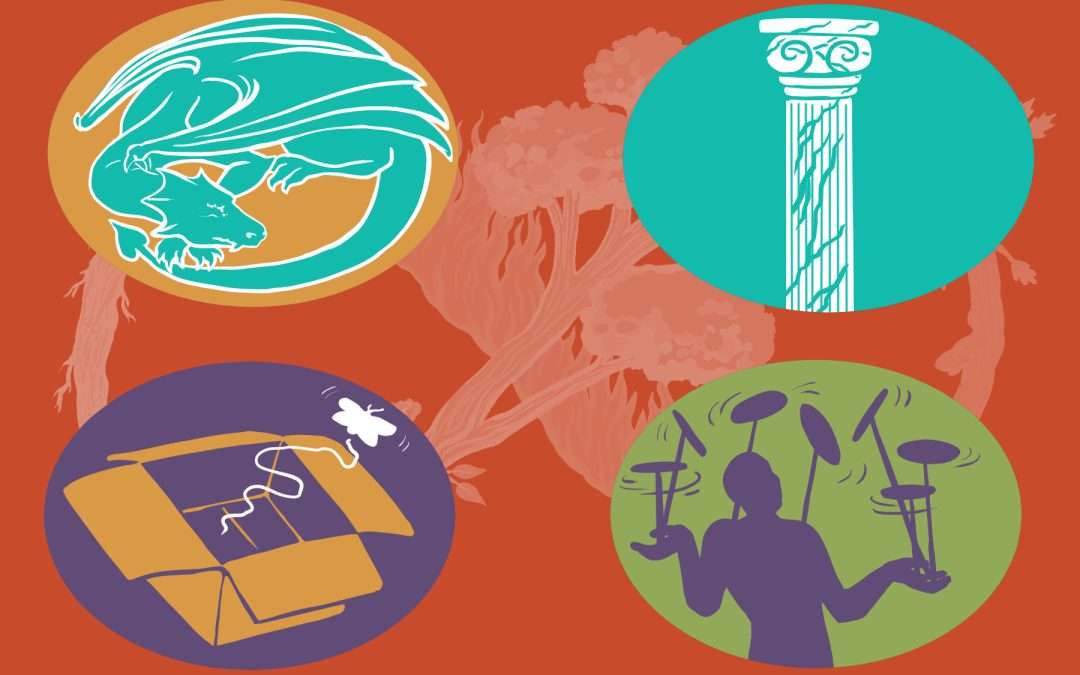
Imagine a human service organization brimming with potential, poised to make a real difference in its community. Now, imagine that same organization struggling to overcome chronic funding shortages, paralyzed by rigid procedures, or overly reliant on a single leader. These are not isolated incidents; they are manifestations of common organizational ‘traps’ that can undermine even the most dedicated efforts. Drawing upon the framework of the Adaptive Cycle, this post will identify these traps – scarcity, charisma, rigidity, and chronic disaster – and offer practical strategies for avoiding them.
Scarcity Trap
Let’s start at the bottom left corner of our Adaptive Cycle. When an organization/program is being created or redesigned, it can feel like there are not enough resources to implement the program. I am purposely using the word “resources” because sometimes what is needed are people who believe in the vision to join the organization and provide their expertise and energy. This can be frustrating. If you stay in this “Scarcity Trap” it is easy to become overwhelmed. It can feel as if nobody sees the problem you are trying to solve, or believes in the solution you are trying to generate.
Let this be the time to ask for help, think outside the box, network with as many people to find those who are aligned with your ideas, be specific about what you need from people and ask them directly to help with small pieces of the project. Consider different partnership opportunities. For example, a grassroots organization might have a brilliant idea for a program but lack the funding to hire staff or secure a physical space. To overcome this, they might partner with a local church to use their facilities in the evenings or recruit volunteers with expertise in grant writing to help them secure funding.
Moving beyond the scarcity trap requires us to discover the resources that are available to us. As we move through this discovery, we can see first hand how external stakeholders perceive the problem and the potential solution. These perceptions can help us uncover barriers to implementation and focus our problem-solving. It can help us discover resources we had not originally considered. We shift from scarcity to abundance.
Seeking support? Contact us about our consulting services.
Charisma Trap
Have you ever heard of Founder’s Syndrome? Its real. You can do a google search, find literature about the phenomenon, and use guides on how to shift power away from the founder. Founder ‘s Syndrome in a nonprofit human services organization refers to the challenges and difficulties an organization faces when the founder(s) maintain excessive influence and control, even after it’s no longer appropriate or beneficial for the organization’s long-term health and sustainability. It often stems from the founder’s strong vision, passion, and initial success in establishing the organization.
Founder’s Syndrome is the Charisma Trap. It is almost inevitable as one, or even a few, founder(s) are engaging external stakeholders to find support, share a collective vision, mission and strategy, and have a difficult time sharing power with new stakeholders who have ideas that might be different. There are a host of ways to move through this trap, and all require working with the charismatic leader(s). Charismatic leaders must understand the role they play in creating a legacy and a sustainable organization. They also need to understand that change is never created alone. These are sensitive conversations as you don’t want the organization to lose the relationships the founder(s) have created.
Building the capacity of the Board of Directors to understand and hold a vision collectively is crucial. Allowing the staff to innovate and develop more ways to operationalize the vision/mission can create more diverse ways of supporting clients who seek services from the organization. Finally, connecting external stakeholders to the outcomes of the organization will ensure long term support remains as the founder moves away from significant leadership roles.
Rigidity Trap
During the COVID-19 pandemic, especially during the “stay at home” phase, people would often say, “I can’t wait till we get back to normal.” We wanted to go back to the way things were before being asked to take responsibility for inhibiting the spread of the coronavirus. This is an example of the Rigidity Trap. This trap appears prior to the release phase of the Adaptive Cycle. It is the desire for organizations to hold on to what they are doing and how they are doing it regardless of external driving forces that are requiring change. For example, a job training program might continue to offer training in outdated skills even though there is no longer demand in the job market. This compromises the success of the organization in the community that it serves.
In some ways, the Rigidity Trap is embedded in the organizational culture as a means of creating structure, stability, and predictability. Hierarchy is a common way of structuring organizations in order to improve efficiency. This can also lead to very top-down decision-making processes that limits staff input. Creating a lack of ownership and resistance to change. Innovation is suppressed if there is not a culture supporting diverse opinions and voices in how the organization meets the needs of those it serves. Unfortunately, this innovation and experimentation is what is needed in order to move the organization through the Adaptive Cycle.
Chronic Disaster Trap
As the organization moves through the release phase, it can begin to reorganize or it can fall into the Chronic Disaster Trap. It is quite possible for an organization to become stuck in a cycle of constant crisis and instability. If trust is weak, the culture is volatile, or their is an inability to agree on a shared vision, renewal can be hindered. To break this cycle, leaders need to focus on building strong relationships, fostering open communication, and developing a shared vision for the future. Enabling the organization to move through the release into renewal/reorganization.
We’ve introduced the traps that can prevent human service organizations from effectively moving through the Adaptive Cycle: Scarcity, Charisma, Rigidity, and Chronic Disaster. Recognizing these pitfalls is the first step toward building a resilient and responsive organization. By understanding the dynamics of each trap and proactively implementing the strategies outlined, human service organizations can better navigate the complexities of change, maximize their impact, and ensure long-term sustainability within their communities. As we continue this series, we’ll explore how to leverage the Adaptive Cycle to create organizations that are not only adaptable but also thrive in the face of adversity.