
Drawing Parallels Between Black History and the Present Moment
Black History Month is often framed as a time to look back — to honor heroes, reflect on pivotal moments in the Civil Rights Movement, and celebrate progress. As an African American man, and as a leader in a firm grounded in equity, I believe that framing is incomplete. Black History Month (alongside MLK Day, which falls just weeks before) is also a time to recognize where inequities still exist in America and what Black History continues to teach us about American History.
Seeking support? Contact us about our consulting services.
Today, that history shows up in the targeting of Latin communities across this country.
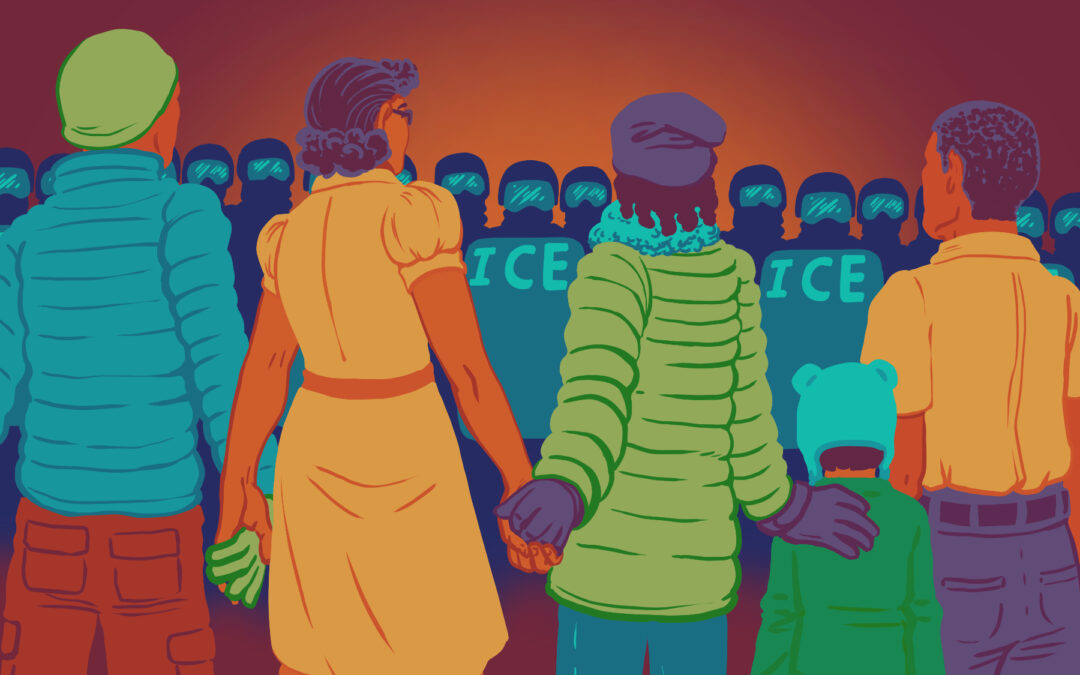
What we are witnessing through Immigration and Customs Enforcement (ICE) is not simply “immigration enforcement.” It is the deliberate targeting of a racialized group through policy, policing, and public spectacle. It includes arrests and shootings in broad daylight, as well as early-morning raids carried out quietly at 6 a.m. as people head to work, far from cameras and headlines. It is families separated in front of neighbors. It is fear introduced into schools, workplaces, and community spaces. And it is all justified through a familiar and dangerous language: criminals, threats, illegals — un-American.
Black Americans know this playbook.
We know what happens when systems are constructed around fear — when a group of people is seen as something to be controlled rather than protected. We know what happens when growing freedom, visibility, or population is framed as a threat to “American values.” Today, the mechanisms may look different, but the logic is hauntingly familiar. Fear is still being used to justify overreach in the enforcement of laws that could otherwise be sensible and humane.
Immigration status is complex, and a functional system does require laws, processes, and accountability. Acknowledging injustice in how ICE operates does not mean ignoring the need for immigration reform. In fact, it means confronting how broken that system has become. It requires asking why enforcement has become the loudest tool while reform remains perpetually deferred. When pathways to legal status are blocked by years-long backlogs and structural barriers, enforcement stops being about law and starts being about control. Black history teaches us what happens when punishment is prioritized over systems change.
Find systems change case studies in our Portfolio.
When leaders who have heavily invested in ICE operations across the nation claim they are “just arresting criminals,” we are hearing a narrative that has been weaponized against Black communities for centuries. In my lifetime alone, it fueled the War on Drugs in the 1980s, devastating Black families under the guise of public safety while ignoring more prevalent drug use in the majority population. It reemerged in the “law and order” politics of the 1990s — across both major parties — relying on fear to justify widespread criminalization instead of criminal justice reform. The logic remains the same: if people can be framed as criminals, then mass arrests supersede humane treatment, rights become conditional on conformity, and some lives are deemed expendable.
At our firm, we are explicit about this: systems matter. And when systems produce predictable harm to specific communities, that harm is not accidental — it is structural. Equity demands that we name those structures plainly, even when it makes people uncomfortable. Especially when it makes people uncomfortable.
This stance is not about partisan politics; rather my views are shaped by historical memory. Black History teaches us that the tactics of oppression were never isolated to one group, but to any group of people that were deemed a threat by American leadership.
To our Latin brothers and sisters: we see you. We see the fear being imposed on your communities. We see the way your humanity is debated instead of assumed. We see how language is used to make violence, detention, and confinement feel reasonable. Black History demands that we do not look away when this happens to anyone.
Black History Month loses its meaning if it only honors the past while ignoring the present. It becomes hollow if we celebrate Dr. King’s words while excusing policies that contradict the very dream we quote. Black history has always been a demand for dignity, safety, and belonging — for everyone.
Honoring that dream today means calling out systems that thrive on fear. It means refusing to accept cages, raids, and racialized surveillance as tools to govern a democratic society.
Black History is not over. It is still unfolding. And it is asking us, right now, who we will stand with when the pattern repeats.