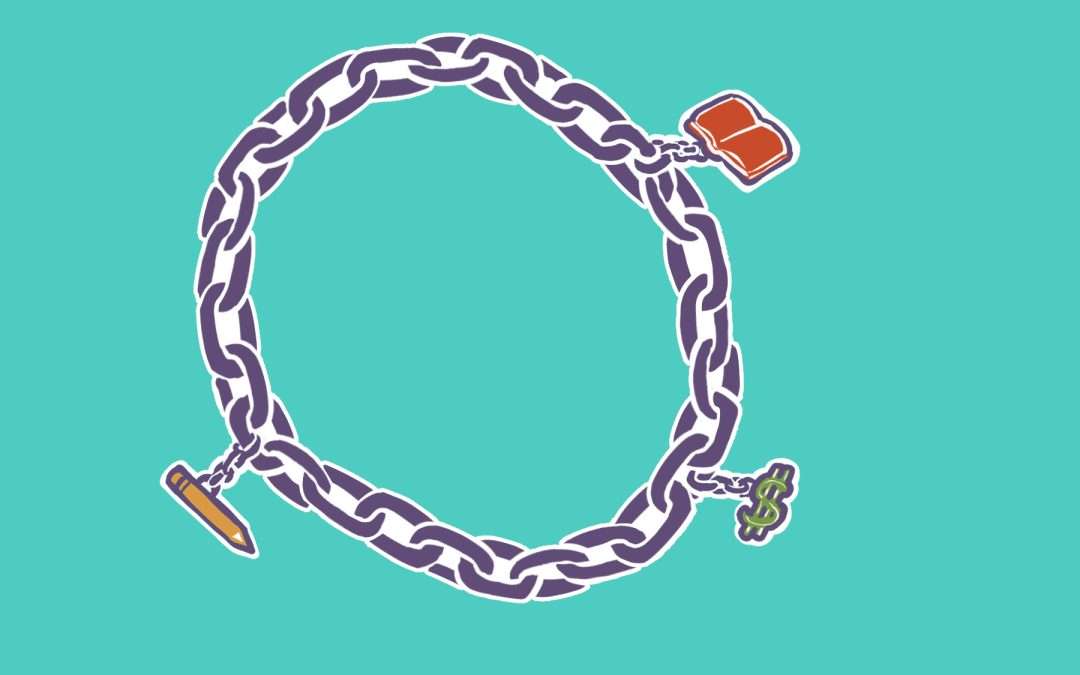
In the last blog post, we identified the elements of a system. We begin to think about the interrelationships between the elements and begin building “loops.” Loops are like chain reactions. One chain link leads to another link and eventually the chain circles back around to the beginning.
A very simple example of a loop is associated with literacy rates. If literacy rates drop, it is possible that one’s ability to find and sustain a living wage job decreases. This in turn can result in a household experiencing poverty and subsequently impact access to education and literacy training and household literacy levels.There are many elements and many factors that are excluded from this particular example. However, over the past few years, Partners for Impact has developed several different systems maps (see our Resources page).
We encourage clients to explore building a systems map for the following reasons:
- Systems maps help us to understand the bigger picture of how a complex human services problem has interconnecting elements that perpetuate the problem.
- Systems maps can begin to uncover the root causes of these problems, and explore solutions that may not be immediately obvious, but have a more powerful impact on solving the problem.
- Systems maps can also improve a community’s ability to collaborate by creating a shared understanding and enabling individuals and organizations to see their role in the solution.
When working with consultants at Partners for Impact, we will guide you through a process of helping you see patterns of the system you desire to change. You will create the vision of a new system that improves outcomes for the people you serve. Key leverage points in the current system will be identified so that you can develop strategies that influence and/or disrupt these leverage points and build the new vision that you have created.
Seeking support? Contact us about our consulting services.