What does soup have to do with evaluation?
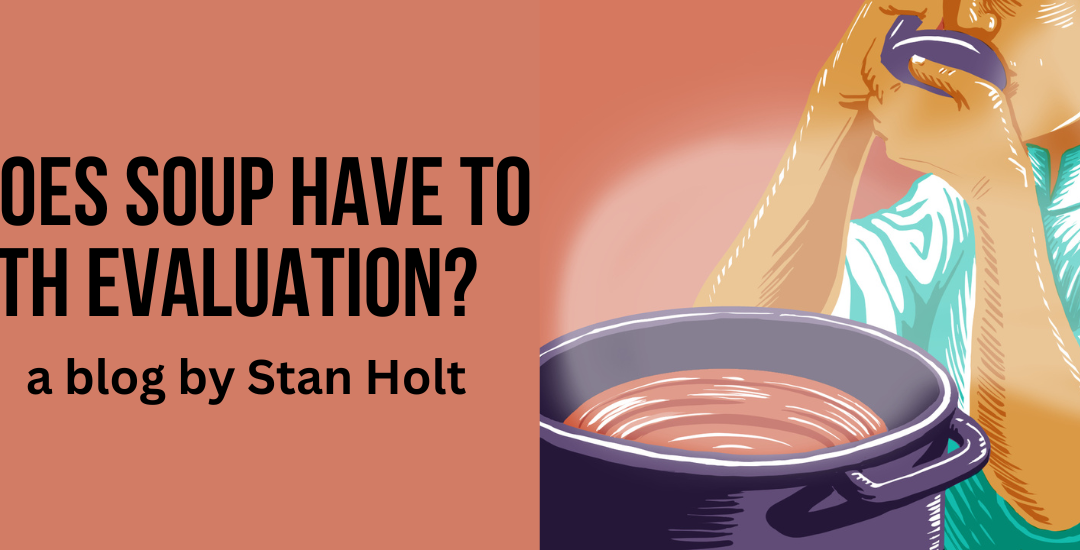
It’s winter in North Carolina. It’s time to bring my favorite cookbook out and start making soups, stews and chili. These are some of my favorite meals to fix in the winter months. But what does cooking soup have to do with evaluation?
Back in 1967, Michael Scriven made a distinction between formative (fostering the improvement of ongoing activities) and summative (whether stated goals/results were met by the activities) evaluation. Robert Stake must have been a soup lover too. He translated those ideas into a metaphor about cooking soup. A good cook will do two things, follow the recipe and taste it along the way to ensure that it is tasting as it should. This is a formative evaluation. Once the soup is eaten by guests a summative evaluation takes place on whether or not the guests perceived the soup as good enough to serve to others. I also like to think of these as process and outcome evaluations.
But is that all?
Huey Chen came along and said there may be more things to consider. For example, what happens if you’re cooking and you taste the soup, and you decide, “Wait a minute, this is not good and not fit to eat. I’m going to toss this out.” The cook has made a “conclusion” about the process of making the soup. Another option is that the soup may be served to the guests who loved it, and the cook asks, “Is there anything that would make this soup better? He’s asking for help and “constructive” feedback.
This resulted in the table below where you can see there are a lot more opportunities to evaluate an intervention when compared to just process or outcome evaluations. There are more types of evaluation than simply formative and summative evaluations.
| Constructive | Conclusive | |
| Process | Constructive Process Evaluation | Conclusive Process Evaluation |
| Outcome | Constructive Outcome Evaluation | Conclusive Outcome Evaluation |
So, as organizational/program leaders it is important to think about where you are in your program journey and what type of evaluation would be useful. The important thing to remember is that you are not bound by the traditional evaluation process of gathering baseline data, designing and implementing a program, and THEN evaluating it with program end data. There are many opportunities throughout the program’s life cycle to evaluate a project. There are many ways to make a satisfying bowl of soup. Partners for Impact loves helping you hone your soup making skills. Contact us for support today.